The IKEA PAX Hack: How to Get a £4,000 Built-In Wardrobe on a Smart Budget.
In the world of London interior design, there is a “secret” that high-end developers use to save thousands without sacrificing
When we think about IKEA, the world’s biggest furniture retailer, visuals of flat pack furniture, simplistic designs, and Scandinavian effectiveness instantly flash across our minds. However, behind this internationally acclaimed brand is a person whose story is as captivating as the company he created. Ingvar Kamprad, the founder of IKEA, lived a life filled with unexpected twists and encouragement-filled lessons. From his modest beginnings to his unusual lifestyle and smart business tactics, there is a lot to discover about the person who made IKEA a famous name.
Ingvar Kamprad’s journey began in 1926 in a small village of Pjätteryd in Småland, Sweden. Born in a moderate family, Kamprad’s entrepreneurial mindset emerged early. At the age of five, he started selling matches to his neighbours, rapidly recognising he could purchase them in large quantities at a small cost and sell them separately for profit. This acumen for detecting effective solutions and optimising financial gain would later define his strategy for business.
Kamprad, when he was a teenager, extended his small-scale ventures to incorporate the following:
At the age of 17, his entrepreneurial activities contributed to the creation of IKEA. The name itself exhibits Kamprad’s roots—“IK” stands for his initials, “E” represents Elmtaryd (his family farm), and “A” stands for Agunnaryd, his native land. This grounding in his roots remained a key element of IKEA’s identity.
In spite of becoming one of the richest people worldwide, Kamprad was well-known for his simplicity and frugality. In contrast to most billionaires, he abstained from ostentation and opted for a humble lifestyle. Kamprad drove an old Volvo, travelled economy class, and even assembled his own IKEA furniture. His liking for modesty was not just a personal quality but an ideology that infused IKEA’s culture.
Kamprad’s frugal mindset shaped not only his personal life but also IKEA’s smart, cost-effective business strategies. For example, he believed in developing economical, useful furniture for common people without sacrificing quality. This vision made IKEA a preferred brand for families worldwide, providing elegant yet feasible solutions at a cost affordable to most.
Despite having huge wealth, Ingvar Kamprad remained changeless in his dedication to frugality. Even at the age of 87, he thinks that there is no need to celebrate birthdays as he used to believe that it is a waste of money. His simple approach was even highlighted when he arrived by bus at a “Businessman of the Year” event, only to be denied entry. Kamprad was unapologetic in his memoir Testament of a Furniture Dealer, stating, “We don’t require fancy cars, dramatic titles, uniforms or other emblems of status. We count on our strength and our determination.”
Kamprad’s journey was not without difficulties. In the 1990s, it came out in the open that he had been connected with a pro-Nazi group in his younger days. This revelation stunned many individuals and gave rise to doubts about his legacy. Nevertheless, Kamprad publicly admitted his past, defining it as the “biggest mistake” of his life. He made an open speech, showing an eagerness to face his mistakes and move ahead.
This event became a turning point for Kamprad and the organisation. It emphasised the significance of clarity and responsibility, values that IKEA continues to endorse. Kamprad’s capability to recognise and learn from his false moves exhibited his perseverance and dedication to personal and professional development.
Kamprad’s smart mindset changed the furniture sector. One of his finest innovative ideas was flat pack furniture, a concept evolved from usefulness and cost-effectiveness. The concept originated when an employee recommended removing table legs to make shipping simpler. Kamprad realised the feasibility of this idea, recognising it could decrease transportation expenses and storage space while enabling clients to assemble their furniture.
This straightforward yet remarkable idea became a distinguishing feature of IKEA, transforming how furniture was designed, packaged, and sold. Clients adopted the DIY assembly model, admiring the mix of the following:
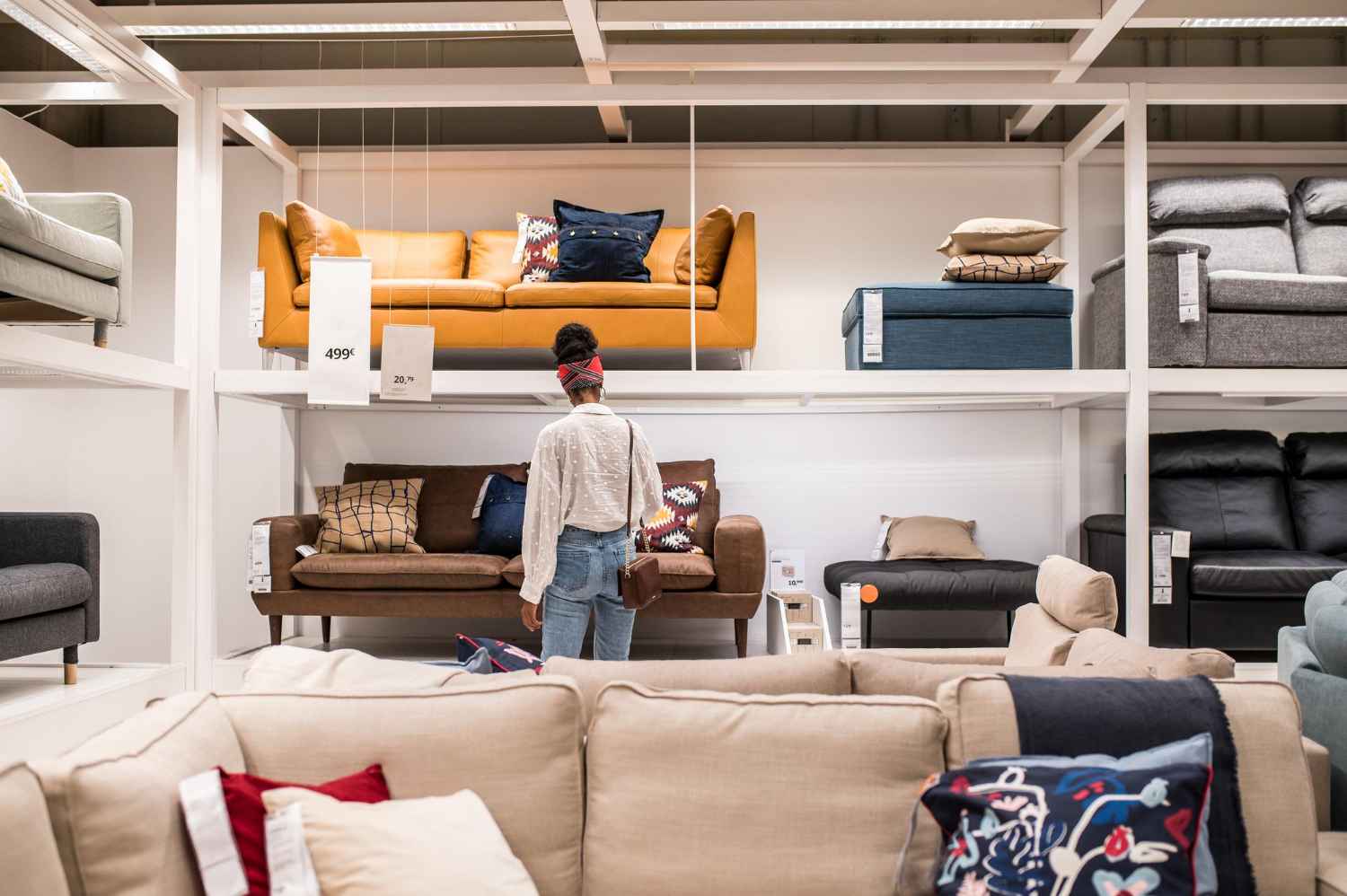
Under Kamprad’s leadership, IKEA expanded from a tiny mail-order business to an international empire with over 400 stores in approximately 50 countries. Despite its huge growth, the company maintained its basic values of inexpensiveness, viability, and innovation. Kamprad’s game plan for IKEA was not only about selling furniture but also about developing a better daily life for most individuals.
Sustainability became a considerable focus for IKEA, with initiatives to utilise biodegradable materials, decrease waste, and minimise the ecological impact of its products. Kamprad’s faith in balancing profit with social commitment impacted businesses worldwide.
KEA’s impact transcends the walls of its stores. The IKEA catalogue is distributed more broadly than the Bible, and in Southern Sweden, it is common to find it right next to the New Testament in hotels. The brand’s signature furniture can be found in residences across Europe and beyond, expanding over more than 44 countries and generating an enormous £27.6 billion in revenue. IKEA’s furniture is not just a product; it has become a hallmark of accessible, functional design for millions throughout the entire world.
Even though Kamprad’s frugality was well known, his benevolent undertakings usually went unnoticed. Through the Stichting INGKA Foundation, Kamprad supported different philanthropic projects concentrated on the following:
The foundation’s work exhibits his dedication to community service, further strengthening his legacy as a socially responsible entrepreneur.
Kamprad’s attitude towards philanthropy was in accordance with his personality—quiet, understated, and effective. Instead of seeking social recognition, he concentrated on making a real difference in people’s lives.
Ingvar Kamprad breathed his last in 2018 at the age of 91, leaving behind an unmatched legacy. His journey from a small village in Sweden to the helm of a global brand is evidence of the power of inventiveness, hard work, and modesty. Kamprad’s life offers useful lessons for emergent entrepreneurs and corporate leaders, highlighting the significance of remaining true to one’s values while adjusting to evolving circumstances.
Today, IKEA continues to thrive, remaining faithful to the principles Kamprad ingrained. The company’s success reflects his vision, proving that businesses can reach the stars by placing emphasis on the following:
Ingvar Kamprad’s story is one of strength, innovation, and simplicity. Kamprad’s journey motivates numerous individuals, from his humble beginnings in Småland to building IKEA into a mega-corporation. At Alain Assembly, we adopt the style of visionaries like Kamprad, aiming to bring the same level of dedication and greatness to our work. His life’s work informs us that anything is possible with determination and a sound understanding.
In the world of London interior design, there is a “secret” that high-end developers use to save thousands without sacrificing
Wayfair has become the go-to for Londoners looking to furnish their homes quickly and stylishly. From velvet upholstered beds to
When it comes to bedroom storage in London, space is the ultimate luxury. Whether you live in a sleek Westminster